
Share This Article
This post may contain affiliate links and we may get paid a small commission if you click on a link.
Please read our privacy policy and cookie policy.
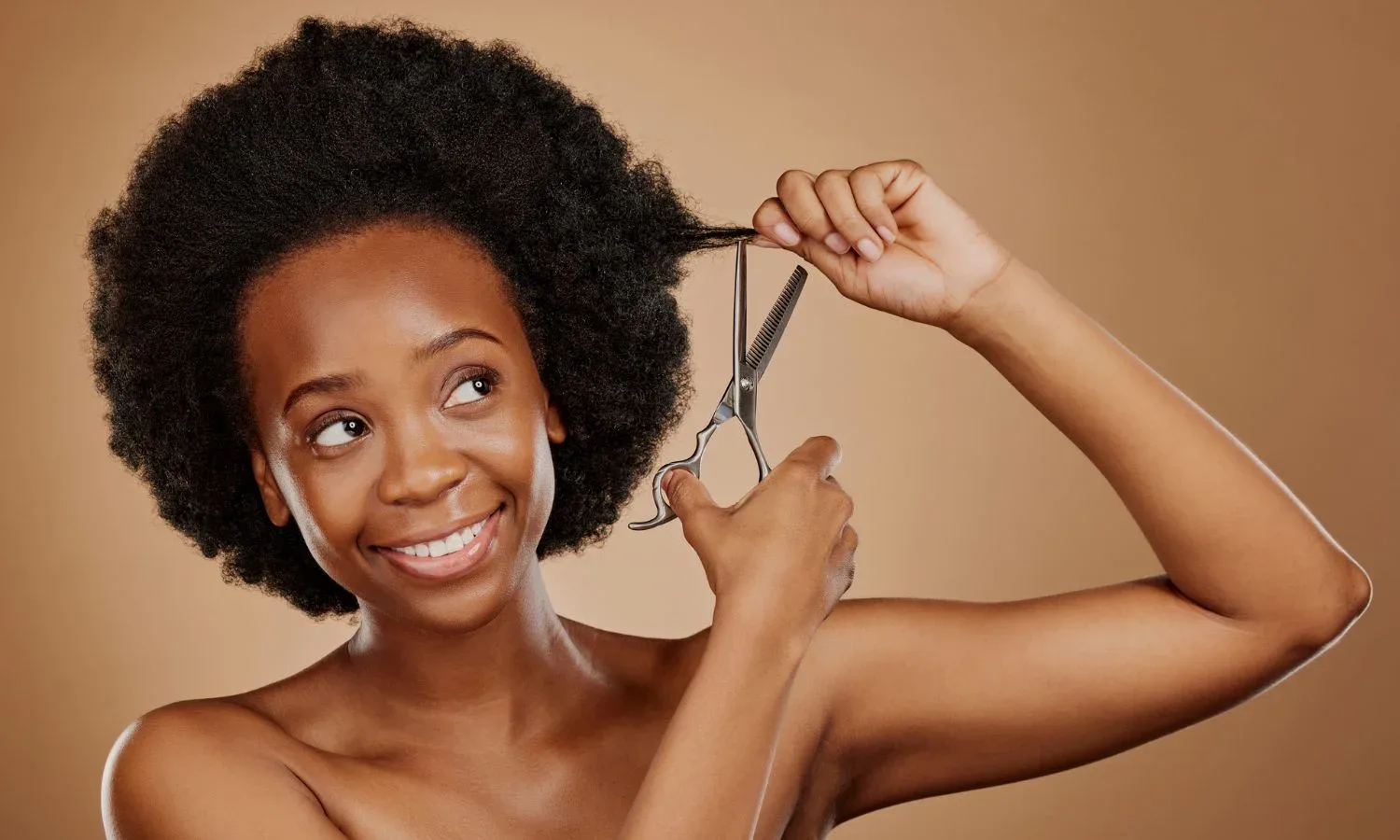
Trimming your hair is an important part of reducing breakage , maintaining healthy ends, and supporting length retention. While trimming doesn’t make your hair grow faster, it helps preserve the length you already have by preventing split ends and breakage from travelling further up the hair shaft.
Many people avoid trims because they’re worried about losing length. However, avoiding trims for too long can make length retention more difficult, particularly for Type 4 hair, where tightly coiled strands are more prone to tangles, single strand knots, and breakage.
In this guide, we’re breaking down the benefits of trimming hair, why regular trims support healthier ends and better length retention, plus additional guidance for Type 4 hair, including how often to trim, signs your hair may need a trim, and the difference between trimming, dusting, and cutting.
Why Trimming Natural Hair is Important?
Trimming your natural hair can feel counterproductive when your main goal is hair growth. Many Naturals hold onto thin or damaged ends because they don’t want to lose progress during a length retention journey. However, keeping damaged ends for too long can lead to increased shedding and thinning.
Split ends are a common form of hair damage caused by friction, dryness, heat styling, and manipulation. Once the hair strand begins to split, the damage can continue travelling upwards if it isn’t removed. This can lead to tangling, knots, and weakened ends.
One of the benefits of trimming natural hair regularly is maintaining healthier ends before the condition becomes more severe. Regular trims can also make detangling easier and support better length retention.
How Split Ends Affect Length Retention
Healthy ends play a major role in retaining length. While your scalp produces new growth, weakened ends can suffer breakage at a similar rate, making it feel like your hair is not growing.
Split ends and single strand knots can also snag onto neighbouring strands during detangling and styling. This increases friction and places additional stress on the hair, particularly on Type 4 textures where tangling is more common.
Neglected ends can eventually leave the hair looking thin, uneven, frizzy, and harder to manage. Regular trims help reduce unnecessary damage and support healthier-looking hair from root to tip.
How Trimming Natural Hair Supports Hair Growth and Length Retention

Trimming your natural hair regularly can support healthier hair and improve length retention, but trims do not directly make your hair grow faster.
Hair growth begins at the scalp and is influenced by factors such as genetics, hormones, nutrition, and overall health. The ends of your hair are the oldest and most fragile part of the strand, making them more vulnerable to split ends, dryness, and tangling.
One of the main benefits of trimming natural hair is removing weakened ends before the condition worsens. If split ends are left untreated, they can continue travelling upwards along the hair shaft and make retention more difficult.
Regular trims help maintain healthier ends, making it easier to retain the length your hair naturally grows over time. For many Naturals, trims can feel discouraging because it seems like you’re losing length. In reality, healthy ends are essential for maintaining fuller, stronger, and more manageable hair.
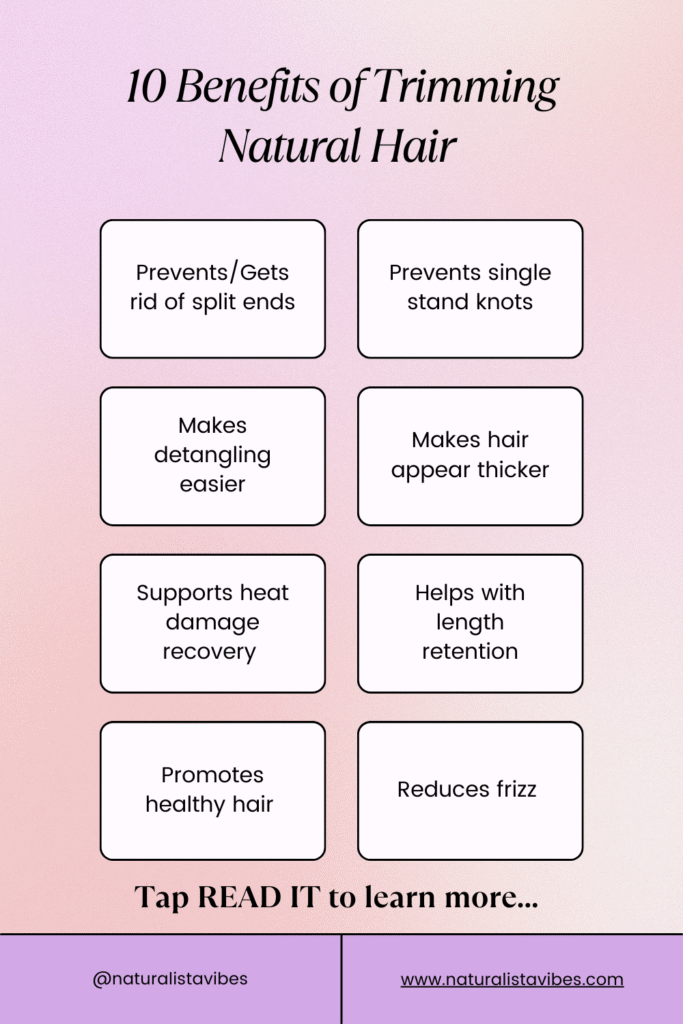
10 Benefits of Trimming Natural Hair
1. Helps Prevent Split Ends
Split ends are one of the biggest barriers to healthy length retention. If left untreated, they can worsen over time and make the hair more prone to tangling, thinning, and weakened ends.
While split ends can’t be completely prevented, regular trims help remove damaged areas before the condition worsens. This helps maintain healthier ends and improves the overall appearance and manageability of your hair.
2. Reduces Single Strand Knots
Single strand knots are a common frustration for Type 4 hair. These knots form when strands wrap around themselves and become tangled at the ends of the hair.
Not only are they frustrating to deal with, but they can also catch onto neighbouring strands and increase tangling during detangling and styling. Pulling or forcing knots apart can weaken the hair strand and contribute to unnecessary breakage over time.
Regular trims can help reduce the appearance of single strand knots and make your hair easier to manage overall. Keeping the hair stretched may also help minimise knotting, although this isn’t always practical when wearing your natural texture regularly.
3. Makes Detangling Easier
Detangling Type 4 hair requires patience and gentle handling, especially when dealing with dryness, knots, or split ends. Split or frayed ends can make the detangling process more difficult because they tend to snag onto neighbouring strands more easily.
This can lead to excessive pulling, tangling, and breakage during wash day, even when using gentle techniques and detangling tools.
Trimming damaged ends regularly can help make detangling smoother, quicker, and more manageable while reducing unnecessary stress on the hair strands.
4. Helps Hair Look Fuller and Healthier
Thin or uneven ends can make the hair appear less full and healthy overall. If the ends of your hair look noticeably thinner than the rest of the strand, it may be a sign that your hair is due for a trim.
Removing damaged ends can help the hair appear fuller, smoother and more even from root to tip. While factors such as genetics, styling habits, and lifestyle can influence hair density, maintaining healthy ends can improve the overall appearance and shape of your hair.
5. Supports Recovery From Heat Damage
Excessive heat styling or repeated use of high temperatures can weaken the hair over time and alter the natural curl or coil pattern. Unfortunately, once heat damage occurs, it usually cannot be fully reversed.
Trimming gradually helps remove weakened areas of the hair while improving the look and feel of the ends. If you regularly use heat on your natural hair, maintaining regular trims becomes even more important for reducing dryness, split ends, and breakage.
Heat itself is not necessarily bad for your hair when used correctly. Using moderate temperatures and a good heat protectant can help minimise the risk of long-term damage.

6. Improves Length Retention
Although trimming your natural hair does not directly increase hair growth, it can help improve length retention over time. Healthy ends are essential for holding onto the growth coming from your scalp.
When damaged or split ends are left untreated, they can continue worsening and eventually lead to breakage higher up the hair shaft. Regular trims help remove weakened ends before the damage becomes more severe, making it easier to retain healthy length.
On average, hair grows roughly half an inch per month, although growth rates can vary from person to person. Because trims usually involve removing small amounts every few months, many people are still able to retain length while maintaining healthier hair.
7. Supports Overall Hair Health
Healthy hair is a major goal for many Naturals, and regular trims can help support that by keeping the ends in better condition. Removing weakened areas before they worsen can help reduce excessive tangling, improve manageability, and make the hair easier to maintain between wash days.
8. Removes Thin or Damaged ends
If the ends of your hair appear puffy, swollen, thin, or frayed compared to the rest of the strand, this can often be a sign of damage. Damaged ends may also affect the overall appearance and definition of your curls or coils.
While treatments such as clarifying shampoos, protein treatments, or deep conditioners may temporarily improve the appearance of the hair, trimming damaged ends is usually the most effective long-term solution.
9. Makes Styling Easier
Healthy ends can make a noticeable difference when styling natural hair. Excessive knots, tangling, and uneven ends can affect how your hairstyles look and make the styling process more frustrating overall.
Regular trims can help your hair feel smoother and easier to work with while improving how styles look and lay. Hairstyles may appear more defined, polished, and even when damaged ends are regularly maintained.
10. Helps Reduce Frizz
Frizz is a normal part of caring for curly and coily hair, but excessively damaged ends can sometimes make frizz more difficult to manage.
Regular trims help remove dry or weakened ends that may contribute to a rougher appearance. Combined with healthy hair practices such as moisturising regularly and protecting the hair at night with satin or silk, trims can help the hair appear smoother and more manageable overall.
The Difference Between a Trim, Dusting and Hair Cut
You’ve probably heard the terms trimming, dusting, and hair cuts used interchangeably within the natural hair community. However, each technique serves a different purpose. Understanding the difference can help you choose the right approach for your hair goals, whether you’re focused on maintaining healthy ends, reducing breakage, or reshaping your hair.
What is a Hair Trim?
A trim focuses on removing damaged or unhealthy ends while maintaining your overall length. Trims are commonly used to maintain the shape and condition of the hair without making a dramatic change to the style.
The amount removed during a trim will vary depending on the condition of your ends. The goal is usually to prevent split ends and breakage from worsening.
What is Hair Dusting?
Hair dusting focuses on removing very small amounts of damage, usually just frayed or split ends along the strand. Unlike a regular trim, dusting removes minimal length and is often used by Naturals who want to maintain as much length as possible.
Dusting can help reduce minor damage before it becomes more severe. However, if the ends of the hair are heavily damaged or uneven, a full trim may still be necessary.
What is a Hair Cut?
A hair cut usually involves removing more length than a trim or dusting session. Hair cuts are commonly done to reshape the hair, create a new style, remove significant damage, or even out uneven areas.
The amount removed will depend on the style you want to achieve and the overall condition of your hair.
How Often Should You Trim your Natural Hair?
How often you should trim your natural hair depends on its condition, how frequently you style it, and your overall routine. While many stylists recommend trimming every 12 to 16 weeks, there isn’t a single schedule that works for everyone. Heat styling, excessive manipulation, dryness, and weakened ends can all affect how often your hair may need a trim.
If you’re dealing with split ends, excessive tangling, or breakage, trimming every 3 to 4 months can help maintain healthier ends and reduce further damage. Once your hair becomes easier to manage, some people may choose to stretch trims slightly longer.
The key is paying attention to the condition of your hair rather than following a strict timeline. If your ends feel rough, tangle easily, or become harder to detangle, it may be time for a trim. Regular trims do not directly increase hair growth, but they can support better length retention by helping maintain healthier ends.
Signs Your Type 4 Hair Needs a Trim
One of the benefits of trimming natural hair regularly is preventing excessive tangling, thinning, and weakened ends before they become more severe.

Your Ends Feel Dry and Rough
Deep conditioning can help improve dry or rough ends, but if your ends still feel rough after moisturising, they may indicate split ends or weakened hair. Pay close attention if they appear frayed, thin, or more tangled than usual.
Detangling Becomes Difficult
If your wash day suddenly becomes more difficult and your hair starts snagging during detangling, damaged ends or single strand knots may be contributing to the problem. Split ends and knots catch on neighbouring strands, increasing friction and making detangling more difficult. Pulling through tangles can also increase breakage.
Your Hair Looks Thin or Uneven
Thin, stringy, or uneven ends can make the hair appear less full and healthy. This often happens when split ends are left untreated for long periods. Trimming damaged ends can help the hair look fuller, healthier, and more even from root to tip.
Your Ends Tangle Easily
If the ends of your hair constantly knot around themselves or form single strand knots, your hair may be overdue for a trim. Damaged ends are more likely to catch on neighbouring strands, making styling and detangling more difficult and increasing the risk of breakage.
Can You Retain Length Without Trimming?
Yes, it’s possible to retain length without trimming your hair. Your hair will continue growing regardless of how often you trim it. However, untreated split ends can continue travelling upwards along the hair shaft, leading to thinning and difficulty retaining healthy length.
Regular trims support length retention by removing weakened ends before the condition worsens. Although trims can feel discouraging during a hair growth journey, you’re usually only removing small amounts every 12 to 16 weeks while your hair continues producing new growth from the scalp.
If trims are avoided for too long, severely damaged ends may eventually require a larger cut to improve the appearance and condition of the hair. This is why many Naturals choose to maintain regular trims rather than waiting until the damage becomes more severe.
What Causes Split Ends in Natural Hair
Split ends are a common form of damage caused by natural wear and tear over time. Because the ends of your hair are the oldest part of the strand, they’re more vulnerable to dryness, friction, manipulation, and breakage.
While split ends can’t be completely prevented, understanding the main causes can help you minimise damage and maintain healthier ends for longer.
Heat Damage
Using heat occasionally is not necessarily bad for your hair, especially when using a heat protectant and moderate temperatures are used. However, excessive heat styling or repeated use of high temperatures can weaken the hair cuticle over time, leading to dryness, split ends, and breakage.
Dryness and Friction
Dry hair is often more fragile and prone to snapping or splitting. Friction from clothing, rough detangling, cotton pillowcases, or excessive manipulation can also weaken the ends of the hair and contribute to damage over time.
Excessive Manipulation
Frequent styling, rough detangling, tight hairstyles, and over-handling the hair can all place stress on the strands. Because of its tight curl pattern, Type 4 hair benefits from gentle handling to help minimise damage and maintain healthier ends.
Regular trims play an important role in maintaining healthy ends, reducing breakage, and supporting length retention over time. Below, we’re breaking down some of the biggest benefits of trimming natural hair and why trims are an important part of many healthy hair routines.
Best time to Trim Type 4 Hair
A general rule of thumb is trimming your hair every 12 to 16 weeks. However, the right schedule depends on the condition of your hair and how well your ends are maintained between trims.
There are also situations where it’s best to remove small areas of damage as soon as they appear. If you notice a severe single strand knot or split end catching onto neighbouring strands, trimming that section can help reduce tangling and stress on the hair.
If your hair becomes harder to detangle, feels rougher than usual, or the ends appear thinner, it may be time for a trim. Some Naturals are able to go several months between trims while still maintaining healthy-looking hair. This is more common when the hair experiences less heat, friction, and excessive manipulation.
The key is finding a schedule that works for your hair and staying consistent enough that trims feel like regular upkeep rather than something to avoid.
FAQs About Trimming Natural Hair
Most people benefit from trimming their hair every 12 to 16 weeks, although the ideal schedule depends on your hair’s condition, styling habits, and how prone the ends are to damage.
Trimming doesn’t make your hair grow faster, but it helps improve length retention by removing damaged ends before they split further and cause breakage.
Many stylists prefer trimming natural hair on dry, stretched hair because it’s easier to see the true length of the hair and identify uneven or damaged areas. Wet hair is more fragile, and shrinkage can make it harder to see how much length is actually being removed.
If weakened ends are left untreated for too long, split ends can travel further up the hair shaft, leading to increased breakage, tangles, thinning ends, and more length loss over time. In some cases, avoiding trims for long periods means more damaged hair needs to be removed later
No. Split ends don’t stop hair from growing at the scalp, but they can make it harder to retain length. As split ends worsen, they weaken the hair strand and increase breakage, making it seem like your hair isn’t growing even though new growth is still occurring.
Yes. Regular trims help improve length retention by removing weakened or split ends before they worsen. Healthier ends are less likely to break, making it easier to retain the length your hair naturally grows over time.
Final Thoughts
The benefits of trimming natural hair go far beyond simply maintaining the appearance of your ends. Regular trims can help reduce split ends, support healthier ends, and make it easier to retain length while keeping the hair easier to manage.
Although trimming your hair can sometimes feel discouraging during a growth journey, holding onto excessively damaged ends often leads to more tangling, thinning, and unnecessary damage in the long run. Incorporating trims into your routine can help maintain fuller-looking hair while making wash days and styling easier over time.
The best trimming routine is the one that works consistently for your hair, lifestyle, and long-term hair goals.