
Share This Article
This post may contain affiliate links and we may get paid a small commission if you click on a link.
Please read our privacy policy and cookie policy.
4C hair is not weak by nature. But structurally, it’s more vulnerable to breakage. If you’re struggling with 4C hair breakage or finding it difficult to retain length – the issue is rarely growth, it’s usually breakage along the strand.
Many women with Type 4 hair experience snapping, thinning ends, and mid shaft splits despite moisturizing consistently and following protective styling routines. Understanding why 4C hair breaks requires looking beyond surface dryness and examining the fibre structure itself.
Tightly coiled hair has more bends along the strand, and each bend acts as a potential stress point. This affects elasticity, tensile strength, and how the hair responds to manipulation, friction, and moisture changes.
In this article, we break down what science tells us about 4C hair breakage, the real causes of breakage and how to reduce it using evidence based principles rather than trends.
The Structural Reality of 4C Hair
4C hair has the tightest coil pattern within the Type 4 category. While all Type 4 textures contain bends along the strand, 4C hair typically has more frequent and sharper curves. These bends aren’t just cosmetic, they influence how the hair fibre behaves mechanically.
Hair strength is determined by 3 core factors:
- Tensile strength – how much pulling force the strand can withstand before snapping
- Elasticity – how far the strand can stretch and return to its original shape
- Cuticle integrity – how smooth and intact the outer protective layer remains
In tightly coiled hair, each bend creates a point of structural stress. Research on curly and Afro-textured hair fibres shows that curvature increases stress concentration along the strand, meaning tension is not evenly distributed along the strand.
Over time, this leads to slight cuticle lifting at certain bends. As the cuticle becomes uneven, friction increases, weakening the fibre and reducing both the tensile strength and elasticity.
This is why breakage often occurs during everyday activities such as detangling, combing, or blow drying. For example, aggressively rubbing your hair with a cotton towel increases surface friction, while gently blotting with a microfibre helps preserve cuticle alignment.
Understanding this structure shifts the focus away from dryness alone and toward managing mechanical stress. Your daily habits either increase or reduce that stress load.
Why is 4c hair more prone to breakage?
4C hair is more prone to breakage because its tightly coiled structure creates multiple bend points along the strand. These curves concentrate mechanical stress and reduce the even distribution of natural oils, increasing vulnerability to friction and tension.
Breakage is rarely caused by one single factor. It’s usually the result of multiple overlapping mechanical and structural stresses acting on an already highly curved fibre.
Lower Sebum Distribution
Sebum is a natural lipid produced by sebaceous glands attached to the hair follicle. It forms a protective coating along the hair shaft, helping to reduce friction and improve flexibility.
In straighter hair types, sebum travels more easily down the strand. In tightly coiled hair, the spiral structure slows this distribution, meaning less natural lubrication reaches the mid lengths and ends. Lower lubrications increases friction during detangling and styling, which contributes to mechanical wear over time.
Higher Shrinkage and Mechanical Tension
Shrinkage reflects elasticity and healthy curl formation. However, when tightly coiled hair is stretched, especially in a dry state, internal tension increases. Dry fibres are less flexible and tolerate less strain before reaching their tensile limit. Because 4C hair contains more curve points, tension concentrates at these areas rather than distributing evenly.
Stretching can reduce tangling, but repeated or forceful manipulation increases the risk of breakage which is why many naturals prefer stretched styles. It’s not shrinkage that causes breakage, but unmanaged tension applied to a tightly curved fibre.
Moisture Swelling and Deswelling, Hygral Fatigue
Hair fibres swell when wet and contract as they dry. Repeated cycles of this expansion and contraction, known as hydral fatigue, can gradually weaken the fibre. Over time, this process can disrupt internal protein bonds and lift the cuticle, increasing roughness and reducing tensile strength.
Washing your hair is essential for scalp health. The concern is not cleansing itself, but prolonged soaking, repeated wet manipulation, or excessive swelling cycles without strengthening support.
Cuticle Wear from Friction
The ends of the hair are the oldest and most exposed part of the strand. Over time, friction from clothing, rough fabrics and repeated strand to strand contact gradually wears down the cuticle. As the cuticle becomes thinner and more irregular, the underlying becomes more vulnerable.
Protective styling can help by reducing repeated abrasion and limiting cumulative mechanical wear. Breakage is often the result of accumulated micro-damage rather than one single event.
What actually causes 4c hair breakage, and what we get wrong
1. Mechanical Stress Is the Primary Trigger
What we think: My hair breaks because it is dry.
What actually causes breakage: Mechanical force exceeding tensile strength.
Dryness increases vulnerability, but breakage occurs when mechanical stress exceeds the strand’s tensile capacity.
Daily manipulation is often the main contributor. Detangling without adequate slip, rough brushing, aggressive blow drying, repeated heat styling, tight styles, and heavy-handed product application all introduce tension and friction. Over time, this cumulative stress weakens the fibre.
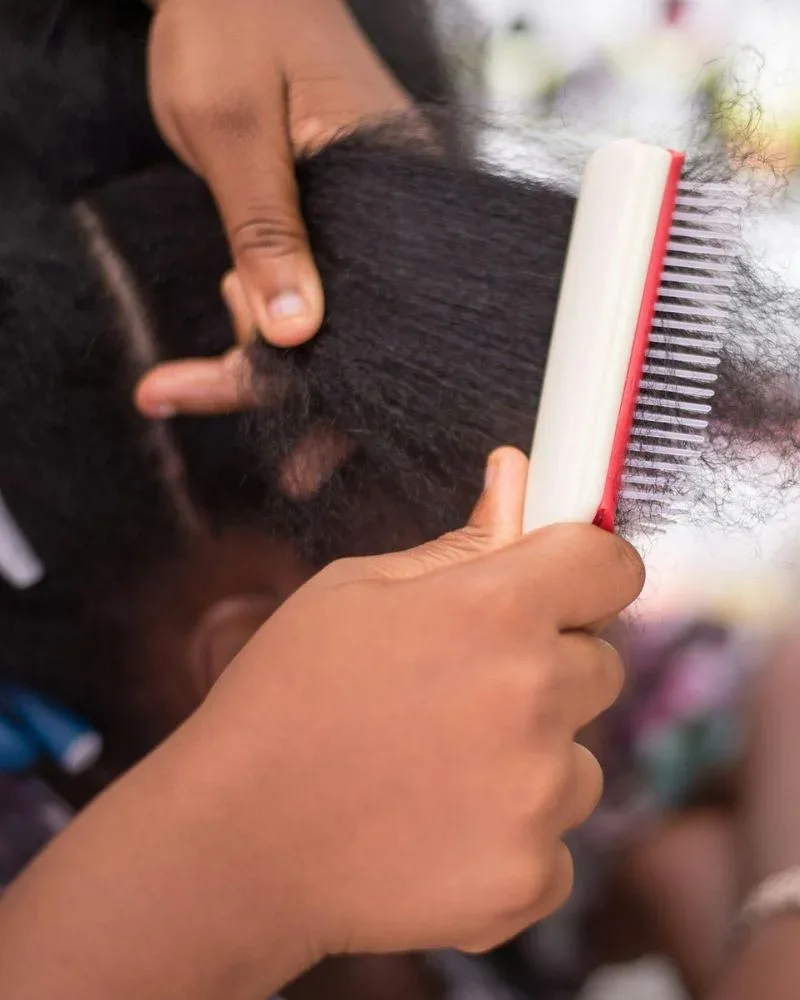
Because 4C hair contains more bends, force does not distribute evenly. Stress concentrates at curve points, making strands more likely to snap under tension. Many people notice strands snapping during blow drying. This is due to mechanical overload caused by excessive tension, insufficient lubrication, or poor technique.
2. Protective Styling Is Not Automatically Protective
What we think: Protective styles stop breakage.
What actually happens: They reduce manipulation, but can introduce new forms of stress.
Protective styling supports length retention when tension and friction are controlled. However, tight installs increase stress at the root, and heavy extensions add additional strain. One of the most overlooked points of damage is takedown. After weeks in a style, shed hairs are trapped and the hair is drier. If removal is rushed, mechanical stress increases significantly.
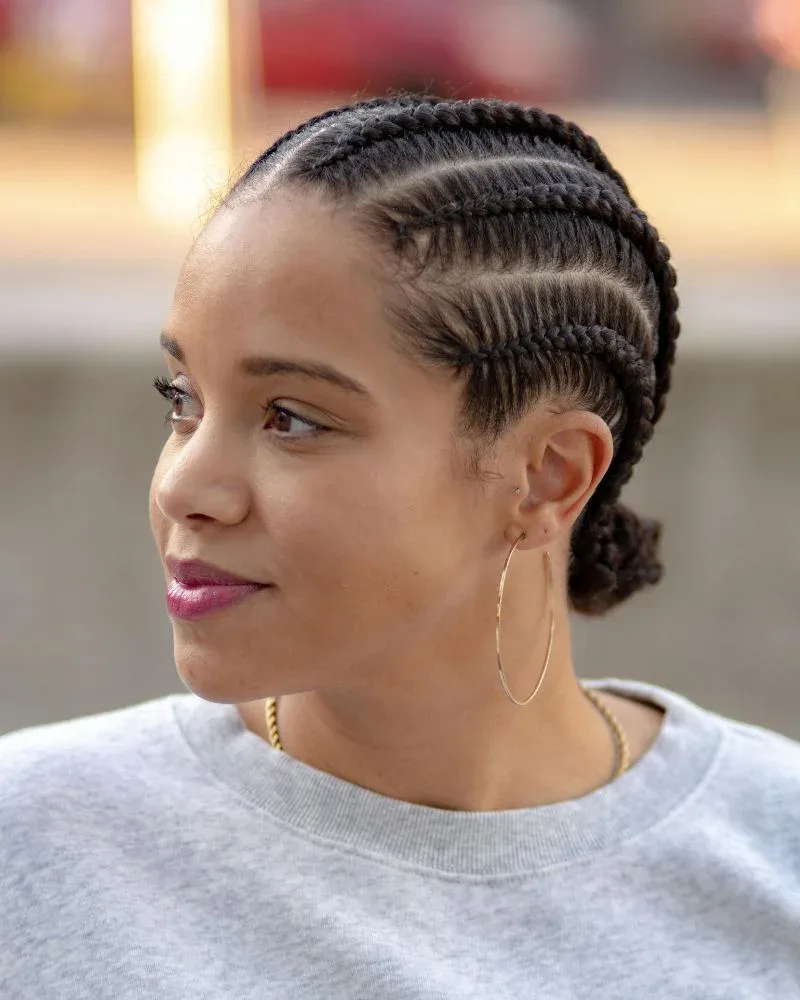
To prevent breakage while wearing protective styles, its best to ensure:
- Installation tension is low
- Ends are properly tucked
- Styles are not left in for too long
- Takedown is done slowly with adequate slip
3. Breakage Is Not Just a Moisture Problem
What we think: My hair is breaking because it needs more moisture.
What actually causes breakage: An imbalance between elasticity and tensile strength.
Healthy hair requires both flexibility and structural strength. When moisture is insufficient, hair becomes brittle and snaps easily. If your hair overly softened without structural support, it may overstretch and break. If internal bonds are weakened through heat or damage, tensile capacity decreases.
Breakage increases when elasticity and tensile strength are not balanced. Moisture alone does not address structural weakness.
4. Single Strand Knots Are a Mechanical Issue, Not a Failure
What we think: Knots mean my routine is failing.
What actually happens: Tightly coiled strands naturally curl back on themselves.
Single strand knots form because the fibre bends and recoils easily. The ends, being the oldest part of the strand, are more prone to curling and interlocking. Knots themselves do not cause breakage. The issue occurs when they are pulled apart aggressively, creating localized stress that leads to snapping.
Careful detangling and trimming isolated knots can help prevent further damage. Knots are often a natural result of curl geometry, not a sign that your routine is ineffective.
Fine 4C Hair vs Coarse 4C Hair
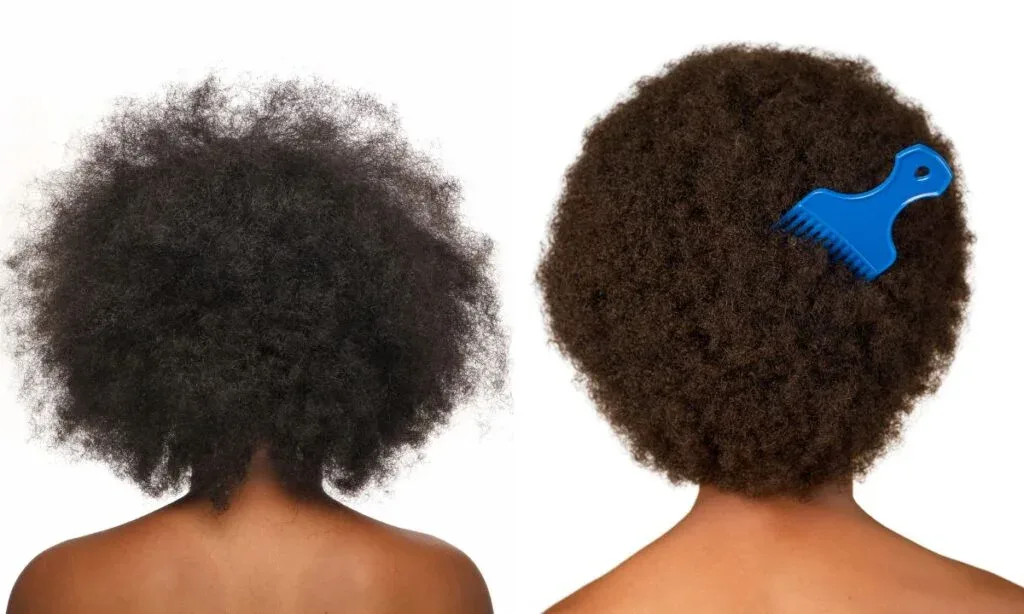
Most people focus on curl pattern (4A, 4B, 4C) when trying to understand breakage. However, strand thickness and density also play an important role. Two people can both have 4C hair but completely different strand diameters, which means their hair can respond very differently to styling and manipulation.
Coarse hair strands have a larger diameter and greater structural mass within the cortex. This increased thickness allows them to withstand more tension and mechanical stress before reaching their breaking point. However, coarse 4C hair presents a different set of challenges. It may feel drier due to thicker cuticle layers, often requiring richer products for adequate slip, and can become stiff if overloaded with protein.
Fine hair , on the other hand has smaller strand diameter and less internal structure. This means fine strands reach their tensile limit faster, making them more prone to breakage during detangling, styling, and daily manipulation. Fine hair is not weak, it simply has a lower tolerance for mechanical force. It can snap more easily if handled aggressively and is more easily weighed down, which is why lighter products and minimal layering tend to work better.
Adjusting Your Routine Based on Strand Thickness
For fine 4C hair:
- Use lightweight leave-ins and avoid heavy product layering
- Minimize excessive tension during styling and detangling
- Focus on gentle manipulation and adequate slip
- Be cautious with frequent protein treatments
For coarse 4C hair:
- Prioritise lubrication and slip during detangling
- Slightly richer products may be beneficial
- Moderate protein treatments may be better than high strength versions
- Monitor stiffness rather than softness
Ultimately, understanding whether your strands are fine or coarse helps you tailor your routine more effectively and reduce unnecessary mechanical stress which is one of the biggest contributors to breakage in 4C hair.
FAQs About 4C Hair Breakage
4C Hair Shedding vs Breakage
Hair shedding and hair breakage are not the same thing. Shedding occurs when a strand naturally completes its growth cycle and falls out from the follicle. On average, shedding 50 to 100 strands per day is considered normal. Breakage occurs when the hair strand snaps along the shaft rather than falling from the root.
If you notice multiple small pieces of hair during detangling or styling, this is more likely breakage rather than natural shedding. You can identify the difference by looking at the strand:
- Shed hairs usually have a small white bulb at one end, which is the root.
- Broken hairs do not have this bulb and are often shorter pieces of hair.
Signs of Breakage in 4C Hair
Common signs of breakage include:
- Hair snapping during combing, brushing, or blow drying
- Small broken pieces of hair during wash day or detangling
- Thinning or uneven ends
- Difficulty retaining length despite consistent growth
How Can I Stop 4C Hair From Breaking?
Reducing breakage involves limiting mechanical stress. Some helpful practices include:
- Detangling gently with adequate slip
- Avoiding excessive tension during styling
- Using protective styles that do not place stress on the roots
- Maintaining a balance between moisture and strengthening treatments
- Minimising friction from rough fabrics or towels
Why Does My 4C Hair Break When I Detangle It?
Detangling is one of the most common times when breakage occurs because tension is applied to the strands. Tightly coiled hair has more bends, which means stress can concentrate at certain points. Without enough slip or with excessive force, the strand may exceed its tensile limit and snap. Working in sections, starting from the ends, and using products with good slip can help reduce breakage.
Why Is My 4C Hair Breaking Even Though I Moisturise It?
Moisture alone does not prevent breakage. While moisture improves elasticity, hair strength also depends on the internal structure of the strand. Breakage can still occur if the hair is exposed to excessive tension, friction, or heat.
A balanced routine that includes gentle handling, proper conditioning, and occasional strengthening treatments is more effective than relying on moisture alone.
Can 4C Hair Breakage Grow Back?
Yes. In most cases, breakage does not affect the hair follicle, so the hair can grow back normally. Breakage occurs along the strand, not at the root. However, frequent breakage can make it seem like your hair is not growing because length is lost over time. Focusing on reducing mechanical stress and improving your routine can help support better length retention.
SOURCES
- Robbins, C.R. Chemical and Physical Behavior of Human Hair. Springer.
- Franbourg, A., Hallegot, P., Baltenneck, F., Toutain, C., Leroy, F. “Current Research on Ethnic Hair.” Journal of the American Academy of Dermatology.
- Loussouarn, G. “African Hair Growth Parameters.” International Journal of Dermatology.