

Share This Article
This post may contain affiliate links and we may get paid a small commission if you click on a link.
Please read our privacy policy and cookie policy.
You’ve spent hours washing, detangling and twisting your hair. You’ve followed the tutorial, used the recommended products and waited patiently for your twists to dry. But when it’s time for the big reveal, your curls aren’t as defined as you’d hoped, and your hair has shrunk more than expected. Sound familiar?
Getting a defined, long-lasting natural hair twist out can feel like trial and error, especially with tightly coiled Type 4 hair. But your results aren’t just down to your curl pattern. How you prepare, twist, dry and unravel your hair makes a difference.
In this guide, we’ll cover how to improve definition, manage shrinkage and make your twist out last longer without complicating your routine.
What Is a Twist Out on Natural Hair?
A twist out is a heat-free style created by setting your hair in two-strand twists, then gently unraveling them. The result is a more defined curl or wave pattern, with the amount of volume and definition depending on how you style your hair.
Unlike two-strand twists, which are worn as a hairstyle, a twist out is the finished look you achieve once the twists are taken down.
Twist outs work on all Type 4 textures, including 4A, 4B and 4C hair. However, the results can vary depending on your natural curl pattern, strand thickness, twist size and whether you start with wet or stretched hair.
Before You Start: What Makes a Twist Out Work?
How you prepare your hair can make a real difference to your finished twist out. From the amount of water in your strands to the products you choose, a few decisions can influence definition, shrinkage and how long your style lasts.
Wet, Damp or Stretched Hair?
You can create a twist out on wet, damp or stretched hair, but each approach can produce slightly different results.
- Wet hair: Can create a defined result but takes longer to dry and may lead to more visible shrinkage.
- Damp hair: Offers a balance between definition and drying time, although some shrinkage is still expected.
- Stretched hair: Helps create a more elongated finish, particularly if you’re trying to preserve visible length. However, definition may be looser depending on your technique.
Choosing Products for Definition and Hold
Your styling products play an important role in how well your twist out sets and maintains its shape. Leave-in conditioners provide conditioning and slip, while mousses and gels contain styling polymers that help create hold. Curl creams can add softness, control and sometimes additional definition. If you’re still finding the right level of hold, explore our guide to the best gels for natural hair.
Layering 2 or 3 compatible products can balance conditioning, definition and hold. If your products curdle when mixed or leave white residue or flakes after drying, you may need to adjust the combination or amount used.
If you have fine natural hair, be mindful of heavy creams and excessive layering, which can weigh down your strands and reduce volume. Lightweight formulations may give you a better finish.
How to Do a Natural Hair Twist Out
Ready to style? Follow these six steps for a defined natural hair twist out.
01
Start with clean, detangled hair
Remove any knots or tangles before styling to help create smoother, more even twists.
02
Divide your hair into sections
Start with four manageable sections, then divide each into smaller sections depending on your desired definition and volume..
03
Apply your styling products
Work your chosen leave-in, curling cream, mousse or gel through each section, distributing the products evenly before twisting.
04
Create your two-strand twists
Divide each section into two strands and wrap them around each other from root to tip, keeping the hair smooth without pulling too tightly. Finger coil the ends or use perm rods to help them set neatly. Repeat until you’ve completed your entire head.
05
Allow your twists to dry completely
Unraveling damp twists can disrupt the set and cause frizz.
06
Unravel, separate and style
Gently undo each twist, then separate the resulting curls where they naturally divide. Avoid excessive handling, particularly if you want to preserve definition.
Bonus tip: Short on time? Flat twists are another option worth trying. They can be quicker to install than individual two-strand twists, although the finished curl pattern may look slightly different.
Watch: How to Do a Two-Strand Twist Out
Want to see the technique in action? Watch Slim Reshae demonstrate how to create a two-strand twist out on natural hair.
Video credit: Slim Reshae, Two-Strand Twist Out Tutorial
How to Get More Definition Without Excessive Shrinkage
Getting the right balance between definition and length can be one of the trickiest parts of a twist out. Finding what works for your hair often takes some trial and error, from choosing the right products to adjusting how you prepare and set your twists.
Why Your Twist Out Shrinks
Shrinkage is a natural characteristic of Type 4 hair, particularly tightly coiled textures like 4C. Tightly coiled hair naturally springs back towards its curl pattern when released from tension. This can make your hair appear much shorter than its stretched length, especially after wet styling.
You might notice your twists springing upwards as soon as you’ve finished them. This doesn’t mean you’ve done anything wrong. It’s simply how your natural curl pattern responds.
Twist outs created on wet hair generally experience more visible shrinkage than those styled on pre-stretched hair. However, starting with wet hair can also help create a more defined finish.
How to Create a More Stretched Twist Out
If you prefer a more elongated result, there are a few techniques worth trying.
- Start with stretched hair: Use banding, African threading or a low-heat blowout before twisting to help preserve more visible length.
- Stretch your twists as they dry: Gently band sections of your completed twists to encourage elongation, without pulling tightly at the roots or edges.
- Experiment with twist size: Larger twists can create a looser pattern, while smaller twists may provide more definition. Try different section sizes to find the balance you prefer.
There’s often a trade-off between elongation and definition. The goal isn’t to eliminate shrinkage completely, but to find a method that gives you the finish you want.
Why Your Twist Out Isn’t Defined (And How to Fix It)
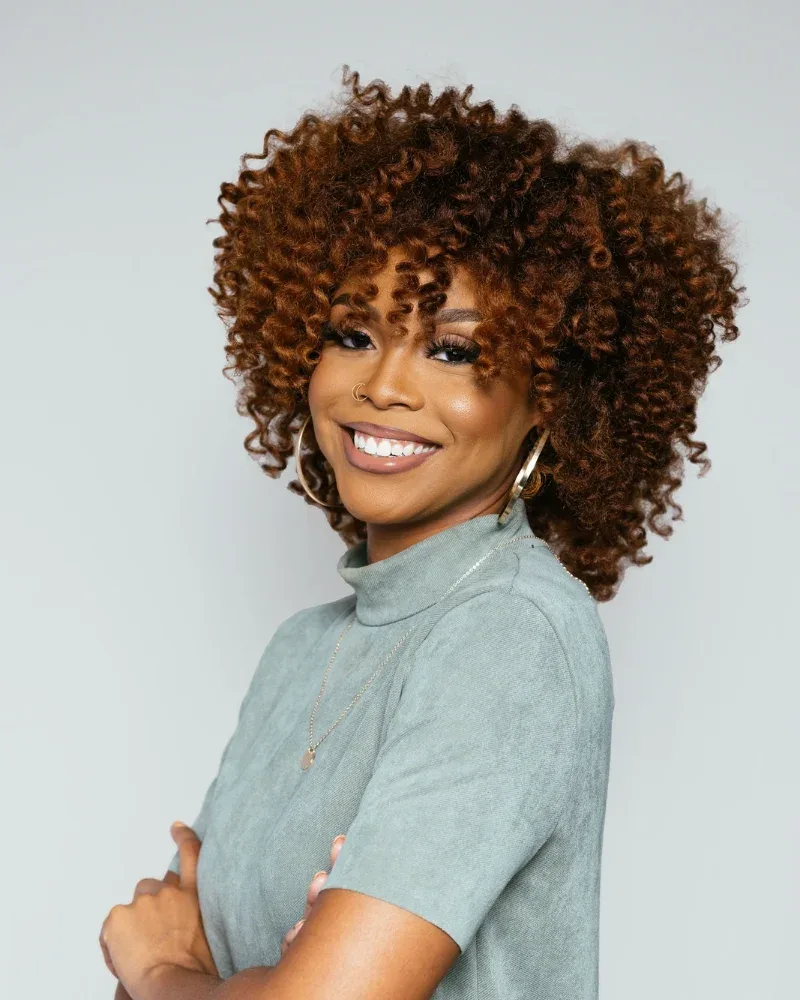
You’ve completed your twist out, but the definition isn’t quite what you expected. Sound familiar? It’s a common frustration, especially when you’re still figuring out which products and techniques work best for your hair.
The good news is that a few small adjustments can make a difference. Here’s what might be affecting your results and how to improve them.
| Problem | Likely Cause | Solution |
|---|---|---|
| Frizz after takedown | Damp twists, insufficient hold or overhandling | Dry fully, use adequate hold and separate gently |
| Definition fades quickly | Insufficient hold, humidity or large twists | Check product hold first, then try smaller twists |
| Puffy or undefined ends | Ends weren’t smoothed or secured | Finger coil the ends or use perm rods |
| Flat or coated hair | Heavy products or excessive layering | Use lighter products or reduce the amount |
| Uneven definition | Inconsistent section sizes, twisting or drying | Keep sections even and twist consistently |
Remember, achieving a defined twist out often involves some experimentation. Rather than changing your entire routine, adjust one thing at a time so you can identify what makes the biggest difference.
Does Your Hair Type Affect Your Twist-Out Results?
Your natural curl pattern, strand thickness and hair density can all influence how your twist out looks and which styling techniques work best.
Twist Outs on 4C Hair
Because 4C hair has a tightly coiled pattern, your twist out may show more visible shrinkage than one created on looser textures. But that doesn’t mean your twist out is any less successful. The key is working with your natural texture rather than expecting every twist out to look the same.
Fine Versus Coarse Natural Hair
Strand thickness and density also influence your results. Lower-density hair may appear less voluminous than higher-density hair, regardless of curl pattern. Heavy creams and excessive layering can weigh down fine strands. Try lighter formulations to preserve volume. Coarser strands may tolerate richer products, but the right choice still depends on your hair’s needs and the finish you’re trying to achieve.
If your strands are fine or prone to breakage, read our guide to fine natural hair and breakage for more advice.
How to Make Your Twist Out Last Longer
A defined twist out doesn’t have to disappear after the first day. Simple nighttime protection and targeted refreshing can help preserve definition without having to constantly restyle.
Protect your hair overnight. Use a satin bonnet or scarf to reduce friction. For added stretch, loosely secure your hair with satin scrunchies or try the pineapple method, depending on your hair’s length.
Refresh only where needed. Smooth undefined sections with a little styling product. Avoid excess water, which can cause shrinkage, or product layering that leaves hair coated.
Switch up your style. As definition fades, try an afro puff or half-up, half-down style to extend your twist out without constant retwisting.
Repeated separating, fluffing and retwisting can increase friction and breakage, particularly on fine or fragile strands. The goal isn’t perfect definition every day, but enjoying your style while supporting healthy hair and length retention.
Frequently Asked Questions
It depends on your preferred finish. Wet hair can produce a more compact pattern with greater shrinkage, while dry, stretched hair may give you more visible length. Damp hair offers a balance between the two.
Wait until your twists are completely dry before unravelling them. Depending on your hair’s density, products and drying method, this could take several hours or overnight. Taking them down too early can cause frizz and reduce definition.
Absolutely! 4C hair can achieve beautifully defined twist outs, although the finished pattern may look tighter than on looser textures. Consistent twisting, suitable product hold and thorough drying can help improve your results.
There’s no fixed timeframe. Longevity depends on your styling technique, product hold, humidity and nighttime maintenance. Some twist outs maintain their definition for several days, while others gradually become fuller and less defined.
Not necessarily. Gel can provide hold and help control frizz, but a styling mousse can also deliver definition and lasting hold. Choose a formula that suits your hair and the finish you want rather than assuming you need both.