


Share This Article
This post may contain affiliate links and we may get paid a small commission if you click on a link.
Please read our privacy policy and cookie policy.
You moisturised your hair yesterday, so why does it already feel dry again? The answer lies in the unique structure of your hair. The tight coils make it harder for your scalp’s natural oils to travel down the hair shaft, leaving the mid-lengths and ends more prone to dryness and moisture loss.
That doesn’t mean 4C hair is difficult to care for. It simply means your hair has different needs, and understanding how it retains moisture can help you build a routine that supports healthier, more manageable hair.
If moisturizing 4C hair feels like a constant challenge, you’re not alone. In this article, we’ll explain why 4C hair loses moisture more quickly, why products don’t always work as expected, and simple ways to improve moisture retention.
Why Does 4C Hair Struggle to Retain Moisture?
Several factors make moisture retention more challenging for 4C hair, but it all comes back to how the hair is naturally structured.
Tight coils make it harder for natural oils to travel
The tight coils of 4C hair make it difficult for your scalp’s natural oils (sebum) to travel from the roots to the ends. As a result, the mid-lengths and ends receive less natural lubrication than straighter hair types and often become dry first. If you’ve ever noticed an oily scalp but dry ends, this is one of the main reasons why.
Moisture naturally evaporates over time
Hair can’t retain moisture forever. After washing or moisturizing, water gradually leaves the hair shaft through everyday exposure to air, friction and the environment. This process is completely normal, which is why the goal isn’t to stop moisture loss altogether. Instead, the focus should be on slowing it down so your hair stays hydrated for longer.
Your hair’s porosity also plays a role
Hair porosity also influences how your hair absorbs and retains moisture. Low porosity hair can be slower to absorb water and products, while high porosity hair often absorbs moisture quickly but loses it just as fast. Knowing your hair’s porosity can help you choose products and techniques that better support moisture retention.

Why Your 4C Hair Still Feels Dry After Moisturizing
If you’re moisturizing 4C hair consistently but still struggling with dry hair, the products themselves aren’t always the problem. Your routine, product buildup and even your environment can all affect how well your hair retains moisture.
You’re adding moisture, but not helping it stay in your hair
If your hair feels dry shortly after wash day, it may not be retaining moisture effectively. Water-based leave-ins and creams help hydrate the hair, while sealing products can help slow moisture loss by creating a protective barrier around the hair shaft.
Remember, oils don’t moisturize the hair on their own. Instead, they help reduce moisture loss after you’ve already hydrated your hair. Learn more about the differences in our Moisturizing vs Sealing Oils guide.
Product buildup can make moisture retention more difficult
Using styling products regularly, including creams, oils and edge controls, can gradually lead to product buildup. Over time, these layers can make it more difficult for water and conditioning ingredients to reach the hair shaft effectively.
Think of it like applying moisturiser over layers of old sunscreen without washing your skin first. Eventually, fresh products struggle to reach the surface properly. Hair works in a similar way. If buildup isn’t removed regularly, your hair may continue to feel dry no matter how much product you apply.
Your environment may be working against you
Your surroundings can also affect how well your hair retains moisture. Central heating, air conditioning, wind, humidity and colder weather can all increase moisture loss, leaving your hair feeling drier than usual.
Instead of following the exact same routine year-round, pay attention to how your hair responds to different conditions. During drier months, you may benefit from adjusting your routine by moisturizing more frequently, using a richer moisturizer or taking extra steps to protect your hair from moisture loss.
How to Improve Moisture Retention in 4C Hair
Improving moisture retention doesn’t always mean buying more products. Often, small changes to your routine can help your hair stay hydrated for longer, reducing dryness and supporting healthier, more manageable hair over time.
Start with clean hair
Moisturizing freshly cleansed hair gives your products the best chance of working effectively. Over time, styling products, oils and environmental debris can build up on the hair, making it more difficult for water and conditioning ingredients to reach the hair shaft.
If you’re using a clarifying or detox shampoo to remove stubborn buildup, follow it with a moisturizing shampoo and conditioner to help replenish moisture before applying your leave-in products.
Choose water-based moisturizers
Water is the primary source of hydration, so look for leave-in conditioners and moisturizers with water listed near the top of the ingredient list.
Rich creams and butters still have a place in many routines, but they work best after the hair has already been hydrated rather than as a replacement for water-based products.
For a step-by-step routine, read our guide on how to moisturize your 4C hair and keep it hydrated for longer.
Help reduce moisture loss
After moisturizing, consider using an oil or butter to help reduce moisture loss. These products don’t moisturize the hair on their own, but they can create a protective layer that helps keep hydration in the hair for longer.
The best approach depends on your hair type, porosity and personal preferences, so don’t be afraid to adjust your routine based on how your hair responds.
Protect your ends and reduce friction
The ends of your hair are the oldest and most fragile part of the hair strand, so they usually become dry first. Protecting your ends by wearing low-manipulation styles, sleeping with a satin bonnet or pillowcase, and reducing unnecessary friction can all help improve moisture retention while reducing breakage.
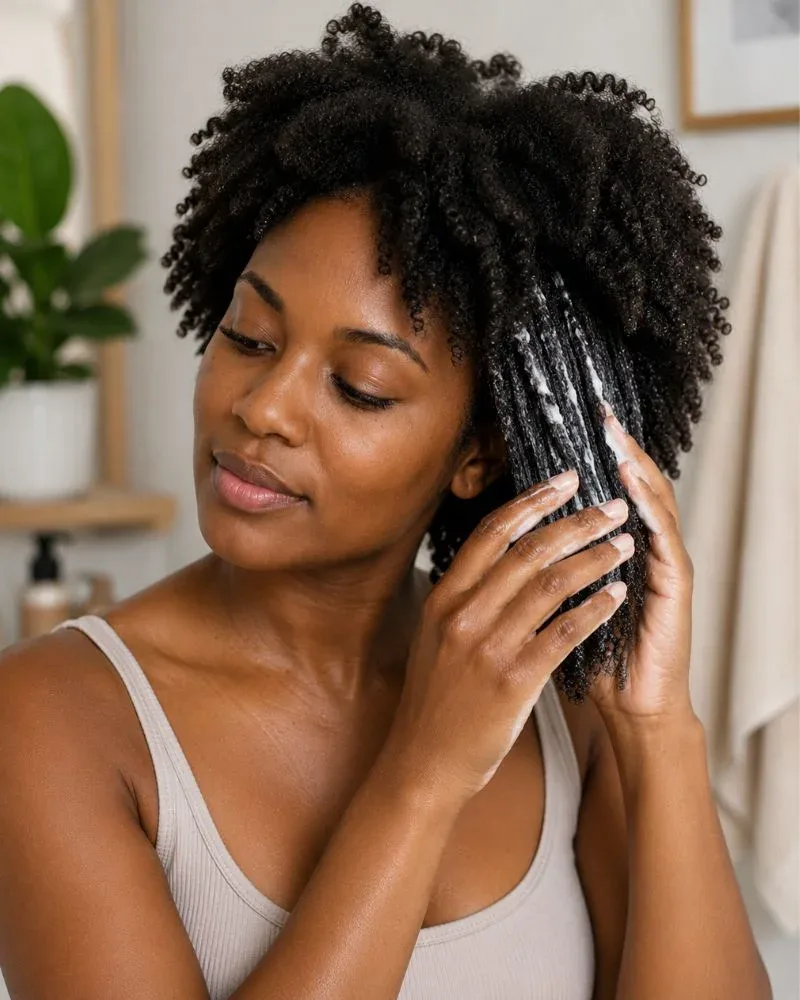
The Bottom Line
Moisturizing 4C hair isn’t about constantly applying more products. It’s about understanding how your hair naturally loses moisture and building a routine that helps it stay hydrated for longer. By cleansing away buildup, choosing water-based moisturizers and taking steps to reduce moisture loss, you can support healthier, more manageable hair while reducing breakage over time.
If you’re ready to build a routine that supports better moisture retention, explore our guide to the best moisturizing shampoos for 4C hair. It can help you choose a cleanser that removes buildup without leaving your hair feeling stripped or excessively dry.
FAQs About Moisturizing 4C Hair
4C hair is naturally more prone to dryness because its tight coils making it harder for your scalp’s natural oils to travel from the roots to the ends. Water also naturally evaporates from the hair over time, so improving moisture retention is often more important than simply applying more products.
Yes. Healthy 4C hair can still feel dry because its tight coil pattern naturally makes it harder to retain moisture. Temporary dryness doesn’t always mean your hair is damaged, but persistent dryness combined with excessive breakage, split ends or a rough texture may indicate that your routine needs adjusting.
The ends are the oldest part of the hair and have experienced the most washing, styling and environmental exposure. Because your scalp’s natural oils rarely reach the ends of 4C hair, they tend to dry out first. Protecting your ends, reducing friction and following a consistent moisture routine can help minimise breakage and support length retention.
Yes. Hair porosity influences how easily your hair absorbs and retains moisture. Low porosity hair may take longer to absorb water and products, while high porosity hair often absorbs moisture quickly but loses it just as fast. Understanding your hair’s porosity can help you choose products and techniques that better support moisture retention. Learn more in our guide, Low Porosity Tips to Boost Your Natural Hair Routine.