

Share This Article
This post may contain affiliate links and we may get paid a small commission if you click on a link.
Please read our privacy policy and cookie policy.
Understanding your hair porosity can make it easier to choose products and build a natural hair routine that works for you. Porosity describes how readily your hair absorbs and loses water. It is separate from curl type, so two people with Type 4 hair can have very different needs.
Have you ever tried a viral hair product only to get completely different results from everyone else? Perhaps water beads on your hair before soaking in, products seem to sit on the surface, or your hair still feels dry despite using several moisturising products. These signs may point to low porosity, although product buildup can cause similar problems.
Understanding how your hair behaves can help you make more informed choices without constantly switching products. In this guide, we’ll explain the characteristics of low-porosity natural hair and share nine practical ways to improve your routine.
What Is Low-Porosity Hair?
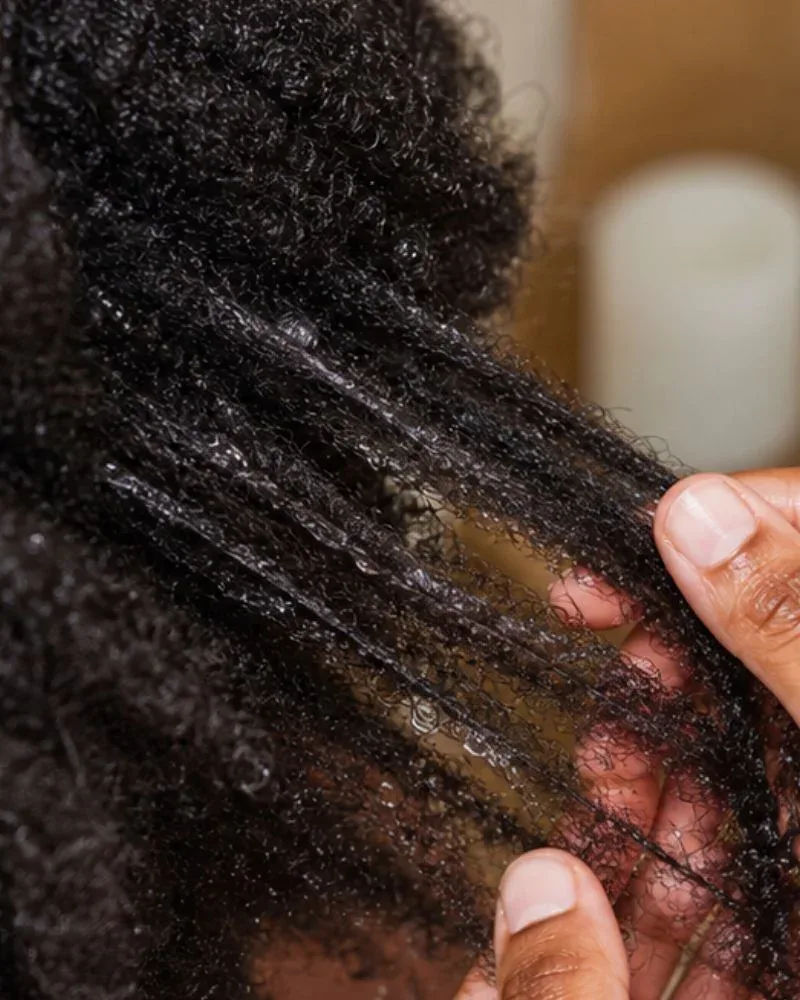
Hair porosity describes how water moves into and out of the hair fibre. Low-porosity hair has tightly packed cuticle cells that lie relatively flat along its surface. This compact structure can make it take longer for water and conditioning ingredients to reach the inner layers of the hair.1
Low porosity does not automatically mean your hair lacks moisture or cannot retain it. The main challenge is often getting the hair thoroughly saturated. Once water enters the fibre, the compact cuticle may help slow moisture loss.
Genetics can influence the natural porosity of untreated hair. However, porosity can vary across your head and along individual strands. Older ends or areas affected by chemical treatments, repeated heat or mechanical damage may become more porous over time.2
Low porosity describes how the hair fibre behaves, but you cannot confirm it from curl type or appearance alone. Instead, look at how your clean hair responds to water and products over time.
How Do You Know If You Have Low-Porosity Hair?
The most useful way to assess your hair porosity is to observe how freshly cleansed hair behaves across several wash days.
Common signs of low-porosity hair include:
- Water initially beads on the surface before soaking in.
- The hair takes time to become fully saturated.
- Products leave residue despite using a small amount.
- Rich creams, oils and butters make the hair feel coated or heavy.
- The hair takes a long time to dry once completely wet.
Product and mineral buildup can create similar symptoms. If water absorbs more easily after using a suitable clarifying or chelating shampoo, buildup may have been contributing to the problem.
What About the Hair Float Test?
The strand float test is a popular at-home porosity test. It involves placing a clean, product-free strand in a glass of water. Hair that remains near the surface is commonly associated with low porosity. Hair that settles around the middle is usually described as medium porosity, while hair that sinks is associated with high porosity.
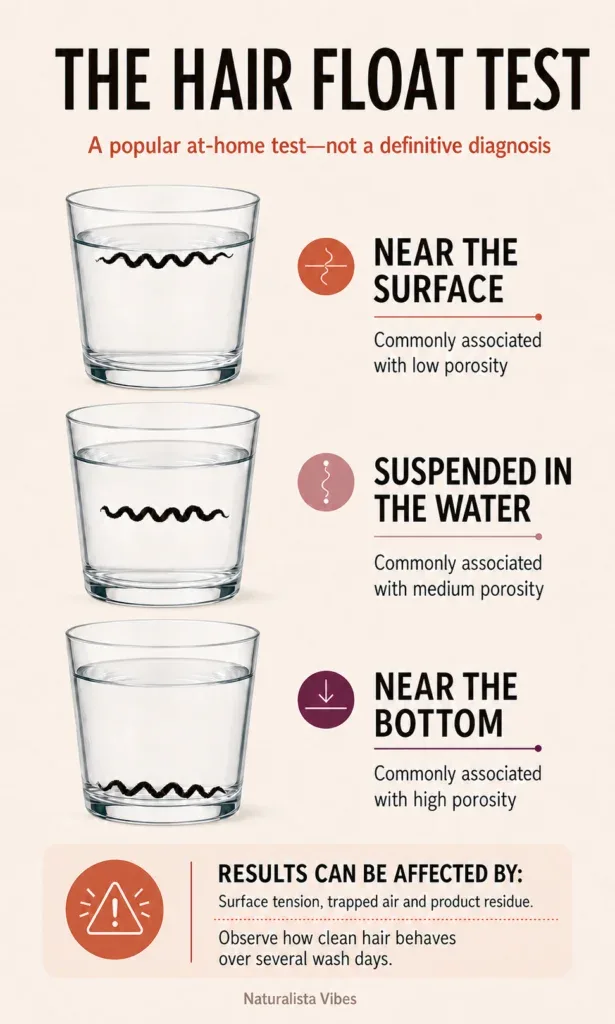
The test cannot give you a definitive answer. Water surface tension, trapped air and traces of product can all affect whether the strand floats or sinks. Even freshly cleansed hair may produce an unclear result. Different sections of your hair may also behave differently. Older ends can be more porous than newer growth, particularly after heat styling, colouring, chemical processing or regular mechanical wear.
Use the float test as one observation rather than a diagnosis. How your clean hair responds to water and products over time will usually provide more useful information.
How to Care for Low-Porosity Hair
Caring for low-porosity natural hair does not need to be complicated. The main priorities are removing buildup, thoroughly saturating the hair and avoiding more product than your strands can comfortably hold.
Your curl pattern is only part of the picture. Strand thickness, density, damage and styling habits can all affect how your hair responds. Start with a simple routine, then adjust one element at a time based on the results.
A Simple Low-Porosity Natural Hair Routine
| Routine stage | Practical starting point |
| Cleanse | Wash according to your scalp, styling routine and product use. |
| Condition | Apply conditioner to thoroughly wet hair and work in sections. |
| Moisturise | Start with a small amount of leave-in and add more only when needed. |
| Style | Avoid unnecessary product layers that leave the hair coated. |
| Clarify | Use a clarifying shampoo when regular cleansing no longer removes residue. |
| Assess | Observe how your hair feels after drying before changing several products. |
How Often Should You Wash Low-Porosity Hair?
There is no fixed wash schedule for low-porosity hair. Your ideal frequency depends on your scalp, styling routine and the amount of product you use. Washing every 7–10 days can be a practical starting point for many people, but some may need to cleanse more or less often.
Regular shampoo and clarifying shampoo serve different purposes. A regular shampoo removes everyday oil, sweat and debris. A clarifying shampoo provides a deeper cleanse when residue has accumulated or products no longer perform as expected.3
Signs you may need to clarify include:
- Visible residue or flaking caused by styling products.
- Hair feeling coated, dull or unusually heavy.
- Water takes longer than usual to saturate clean hair.
- Products sitting on the surface despite using a small amount.
You do not need to clarify at every wash. Every four to six weeks may be a useful starting point, but your routine, product use and water quality will affect how often you need it. Follow with a moisturising conditioner to restore softness and improve manageability. Persistent itching or scalp flaking may have causes unrelated to buildup and should not be treated by repeatedly clarifying.
How Do You Moisturise Low-Porosity Hair?
Application technique can matter as much as the products you choose. Begin with clean, thoroughly wet hair and apply conditioner or leave-in in sections. Start with a small amount and add more only when needed.
Water-based, lightweight formulas can be a useful starting point, particularly if your hair becomes coated easily. Film-forming humectants may help the hair retain water, but the complete formula matters more than one featured ingredient.
A separate oil is optional. Oils do not hydrate hair because they contain no water, but a small amount may add slip, reduce friction or slow moisture loss. Fine strands may need little or no oil, while coarser strands may respond better to a richer product. The aim is to keep the hair soft and manageable without leaving layers of residue.
How to Grow Low-Porosity Hair
Low porosity does not prevent hair from growing. Porosity describes the hair fibre, while growth occurs inside the follicle. Genetics, health, age and other biological factors can influence growth rate.4
Your haircare routine is more likely to affect how much length you retain. Regular cleansing, gentle detangling and low-tension styling can reduce the breakage that makes progress difficult to see. Keeping the scalp clean supports scalp health, but clarifying shampoo does not make the follicles grow hair faster.
Pay particular attention to your ends because they are the oldest and most weathered part of your hair. Trim when you notice splitting, thinning or persistent tangling rather than relying on a rigid schedule. Follow your routine consistently before changing several products at once. Tracking your wash days, products and results can help you identify which adjustments improve softness, manageability and length retention.
If you have 4C hair, our realistic 4C hair routine for length retention explains how consistent wash-day and styling habits can help reduce breakage.
9 Low-Porosity Haircare Tips for Your Natural Hair Routine
Now that we’ve covered the foundations of a low-porosity natural hair routine, here are nine ways to make it work more effectively. You do not need to follow every tip. Start with the changes that address your current concerns, then observe how your hair responds.
1. Look at the Complete Product Formula
Choosing products for low-porosity hair is not about avoiding one specific ingredient. The complete formula, product texture and amount you apply all affect how your hair responds.
Film-forming humectants can help reduce water loss by leaving a light, flexible film over the hair. Examples include:
- Aloe vera
- Flaxseed gel
- Marshmallow root
- Slippery elm
- Panthenol
- Hydroxypropyltrimonium honey
You do not need to avoid every product containing sulphates or silicones simply because your hair has low porosity. A stronger cleanser may help remove stubborn buildup, while some silicone-containing formulas can improve slip and reduce friction. Pay attention to whether a product leaves your hair clean, soft and manageable rather than judging it by one ingredient alone.
2. Use Oils According to Your Hair’s Needs
Oils do not hydrate hair because they contain no water. However, a small amount can add shine, reduce friction and slow some moisture loss.
Lighter-feeling oils such as jojoba, grapeseed, argan and sunflower oil may be easier to use if your hair becomes coated quickly. This does not mean every low-porosity routine needs an oil. Fine strands may need very little, while coarser strands may respond better to a richer sealant.
Coconut oil, butters and heavier formulas are not automatically unsuitable. The result depends on the amount used, the full formulation and how your hair responds. If an oil leaves your hair stiff or greasy, reduce the quantity or skip that step.
3. Try Gentle Warmth When Deep Conditioning
Gentle warmth may help conditioner spread more evenly and can improve the conditioning process for some hair. Apply your deep conditioner to thoroughly wet hair and follow the product’s directions. You can use a warm towel, heat cap or hooded dryer, but the temperature should remain comfortable. Heat is optional and does not need to be used at every wash.
A deep conditioner does not always need to remain on the hair for 30 minutes. Leaving it on longer than the recommended time does not guarantee better results. Deep-condition according to your hair’s condition and the product instructions. Read our guide to deep conditioning Type 4 hair for more advice.
4. Use Steam as an Optional Conditioning Technique
Steam combines warmth with water and may help some hair feel softer during conditioning. However, it does not hydrate the hair on its own or replace conditioner and leave-in products.
You can use a hair steamer or the gentle steam from a shower if your hair responds well to it. Avoid excessive heat, and do not feel that you need to buy a steamer to maintain healthy low-porosity hair. Consider it an optional technique rather than an essential step.
5. Apply Products to Wet or Damp Hair
Conditioner generally works best when the hair is thoroughly wet. Leave-in products can be applied to wet or damp hair according to their directions and your styling needs. Work in sections to distribute the product evenly. Emulsifying a small amount of leave-in with water may help it spread without creating a heavy coating.
If you refresh your hair between wash days, add water or product only when needed. Repeatedly spraying hair and layering more product can eventually contribute to buildup.
6. Pre-Poo When It Serves a Purpose
A pre-shampoo treatment can make detangling easier or reduce friction before washing, particularly when taking down a long-term style. Common options include conditioner, a formulated pre-shampoo treatment or a small amount of oil.
Pre-pooing is optional and not uniquely necessary for low-porosity hair. If your hair already feels coated or difficult to saturate, adding oil before shampooing may create more residue. In that situation, focus on cleansing thoroughly instead. The shampoo formula also matters. A well-formulated cleanser should remove residue without automatically leaving the hair excessively stripped.
7. Trim According to the Condition of Your Ends
Low porosity does not determine how frequently you need a trim. Your ends are the oldest part of your hair and experience the most friction, styling and environmental exposure.
Look for signs such as:
- Split or thinning ends
- Persistent tangling
- Excessive single-strand knots
- Ends that feel rough after conditioning
- Breakage during detangling
Trim when the condition of your ends requires it rather than following a fixed eight- or twelve-week schedule. Our guide to the benefits of trimming natural hair explains what to look for.
8. Reduce Friction While You Sleep
A smooth silk or satin pillowcase can provide extra protection when your bonnet or scarf comes off during the night. It may help reduce friction, tangling and mechanical wear. Silk describes a fibre, while satin describes a type of weave that can be made from different materials. Either can provide a smooth surface, so choose an option that suits your preferences and budget.
A pillowcase will not correct an unsuitable haircare routine, but it can support the work you are already doing to reduce breakage.
9. Manage Buildup Before Adding More Moisture
Product buildup can make hair feel dry, coated or difficult to saturate. These symptoms are often mistaken for evidence that the hair needs more moisturiser. If ordinary shampoo no longer removes the residue, use a suitable clarifying shampoo. Hard-water minerals may require a chelating cleanser rather than another layer of conditioner or oil.
Avoid following a rigid monthly clarification schedule. Your cleansing needs depend on your products, styling routine, water and scalp. Use your hair’s behaviour to decide when a deeper cleanse is needed.
If clarifying noticeably changes how quickly your hair becomes wet, buildup may have been contributing to the problem. Observe your clean hair across several wash days before assuming that every moisture issue is caused by low porosity.
FAQs About Low-Porosity Natural Hair
Start with a simple routine built around regular cleansing, thorough saturation and careful product application. Apply conditioner or leave-in in sections, begin with a small amount and avoid adding layers when your hair already feels coated.
Lightweight formulas can be a useful starting point, but strand thickness and hair condition also matter. Pre-shampoo treatments, steam and gentle warmth are optional techniques rather than essential steps. The best routine is one that leaves your hair clean, soft and manageable without persistent residue.
There isn’t a fixed list of ingredients that everyone with low-porosity hair must avoid. Heavy layers of oils, butters, waxes or film-forming ingredients may cause buildup for some people, but performance depends on the complete formula and amount used.
Sulphates and silicones are not automatically harmful. A stronger cleanser can help remove stubborn residue, while certain silicones improve slip and reduce friction.5 Focus on how the finished product performs rather than rejecting it because it contains one ingredient.
There is no single best oil for low-porosity hair. Oils do not add water, but they can provide shine, reduce friction and slow some moisture loss.
Lighter-feeling options include:
– Jojoba oil
– Grapeseed oil
– Argan oil
– Sunflower oil
– Sweet almond oil
– Avocado oil
Begin with a small amount and assess the result after your hair dries. Fine strands may need little or no separate oil, while coarser strands may respond better to a richer sealant. Stop or reduce use if the hair feels greasy, stiff or coated.
Low-porosity hair does not automatically need to avoid protein. Whether a protein-containing product helps depends on your hair’s condition, strand thickness, the strength of the formula and how often it is used.
Hair affected by heat, colour or chemical processing may benefit from occasional strengthening treatments.6 Healthy, minimally damaged hair may need them less frequently. Reduce use if your hair becomes persistently stiff or difficult to manage.
If you have Type 4 hair, our guide to protein treatments for 4C hair explains how to choose a product based on your hair’s condition.
Yes. Layers of oils, butters, styling products or hard-water minerals can make hair difficult to saturate and cause products to sit on its surface.
If your hair absorbs water more easily after using a clarifying or chelating shampoo, buildup may have contributed to the problem. Observe how your clean hair behaves across several wash days before deciding it is low porosity.
Yes. 4C describes a curl pattern, while porosity describes how readily the hair takes in and loses water. Someone with 4C hair can have low, medium, high or mixed porosity.
Strand thickness, density, damage and styling habits can also affect which products and techniques work best.
Hair porosity can change as the strand becomes weathered or damaged. Repeated heat styling, colouring, chemical processing and mechanical wear may damage the cuticle and increase porosity.
Older ends may therefore behave differently from newer growth, particularly if they have experienced more heat, styling or environmental exposure.
Final Thoughts
Building a low-porosity natural hair routine does not need to involve endless products or complicated techniques. Start with clean, thoroughly saturated hair and use only as much product as your strands need.
Lightweight formulas, gentle warmth and occasional clarification may help, but none of these approaches works the same way for everyone. Strand thickness, damage, styling habits and product combinations can all affect your results.
Read product labels, but consider the complete formula rather than judging a product by one ingredient. Most importantly, pay attention to how your hair behaves over several wash days. If your routine leaves it coated, stiff or difficult to manage, simplify your product layers before buying something new.
Sources:
- Breakspear S, Ivanov DA, Noecker B, Popescu C, Rosenthal M. “Cuticle—Designed by Nature for the Sake of the Hair.” International Journal of Cosmetic Science. 2022. ↩︎
- Hessefort Y, Holland BT, Cloud RW. “True Porosity Measurement of Hair: A New Way to Study Hair Damage Mechanisms.” Journal of Cosmetic Science. 2008.
↩︎ - McMullen RL et al. “Hair Surface Quality: Laser Scattering as a Tool for Characterizing the Surface Condition and Deposits from Shampoos and Conditioners.” International Journal of Cosmetic Science. 2020. ↩︎
- Loussouarn G. “African Hair Growth Parameters.” British Journal of Dermatology. 2001. ↩︎
- La Torre C, Bhushan B. “Nanotribological Effects of Silicone Type, Silicone Deposition Level, and Surfactant Type on Human Hair.” Journal of Cosmetic Science. 2006. ↩︎
- “Penetration of Different Molecular Weight Hydrolysed Keratins into Hair Fibres and Their Effects on the Physical Properties of Textured Hair.” International Journal of Cosmetic Science. 2020. ↩︎


2 Comments
Mimi
Thanks for the tips. What about olive oil and blackseed oil for low porosity hair or are they considered too heavy?
NaturalistaVibes
Blackseed oil is considered as a lightweight oil. Unfortunately, olive oil is classed as heavy. But one way you can get around the heaviness is by mixing it with other lightweight oils which will dilute it slightly. Some low porosity naturals use olive oil as part of their pre-pooing treatment so thats another way you can incorporate it if you really want to use it. I hope that helps and thanks for highlighting blackseed oil.
Comments are closed.