

Share This Article
This post may contain affiliate links and we may get paid a small commission if you click on a link.
Please read our privacy policy and cookie policy.
Wash day sometimes has a bad reputation because many people expect it to take all day. But the truth is, it was never supposed to be complicated. A wash day routine for Type 4 hair may take longer than washing straighter hair. However, unnecessary steps often make the process more draining than it needs to be.
Some naturals even avoid washing their hair regularly because they feel overwhelmed by the number of steps involved. Pre-poo treatments, scalp oils and hair masks can all have benefits depending on what your hair needs, but they don’t need to be included every wash day.
In this guide, we’ll focus on the essentials! The goal is to create a simple wash day routine that doesn’t feel like a chore but still helps you maintain a clean scalp, healthy hair and less breakage.
The Simple Type 4 Wash Day Routine
A simple wash day routine for Type 4 hair only needs three essential stages:
- Cleanse: Shampoo your scalp, then gently work the lather through the lengths of your hair.
- Condition and detangle: Apply a conditioner with plenty of slip and detangle once, working carefully from the ends towards the roots.
- Moisturise and style: Apply a suitable leave-in conditioner or moisturiser, then move directly into your chosen style.
Note: Pre-pooing, deep conditioning, protein treatments and clarifying can all be useful, but they don’t need to be part of every wash day. Include them occasionally when your hair or scalp shows a genuine need, rather than following a rigid weekly schedule.
Why Type 4 Wash Day Becomes an All-Day Event
Wash day has become an all-day event partly because of the routines and habits we’ve picked up online. When every useful treatment becomes a compulsory weekly step, the process quickly becomes longer than it needs to be.
Repeated detangling can also extend wash day, especially if your hair is long or has a high density. Choose one main detangling stage: before shampooing or while conditioning. Washing in sections and using products with enough slip can make knots easier to manage.
Layering several products adds more time too. More product doesn’t always mean more moisture. Multiple oils, creams and treatments can leave the hair feeling coated or heavy without improving the final result.
It’s also easy to copy someone whose hair has a different length, density or strand thickness. Long, dense hair may require more sections and time than shorter or lower-density hair. Pay attention to how your hair responds and remove steps that don’t serve a clear purpose.
A shorter routine should still include thorough cleansing and gentle handling. The goal is to remove redundant steps and not rush through the ones your hair genuinely needs.
What You’ll Need
For this simple wash day routine, you only need:
- Shampoo
- Rinse-out conditioner with good slip
- A wide-tooth comb or detangling brush, if you use one
- Leave-in conditioner or water-based moisturiser
- Styling product for your chosen hairstyle
- Sectioning clips
- Microfibre towel or cotton T-shirt, if needed
The Three-Step Wash Day Routine for Type 4 Hair
Step 1: Cleanse Your Scalp and Hair
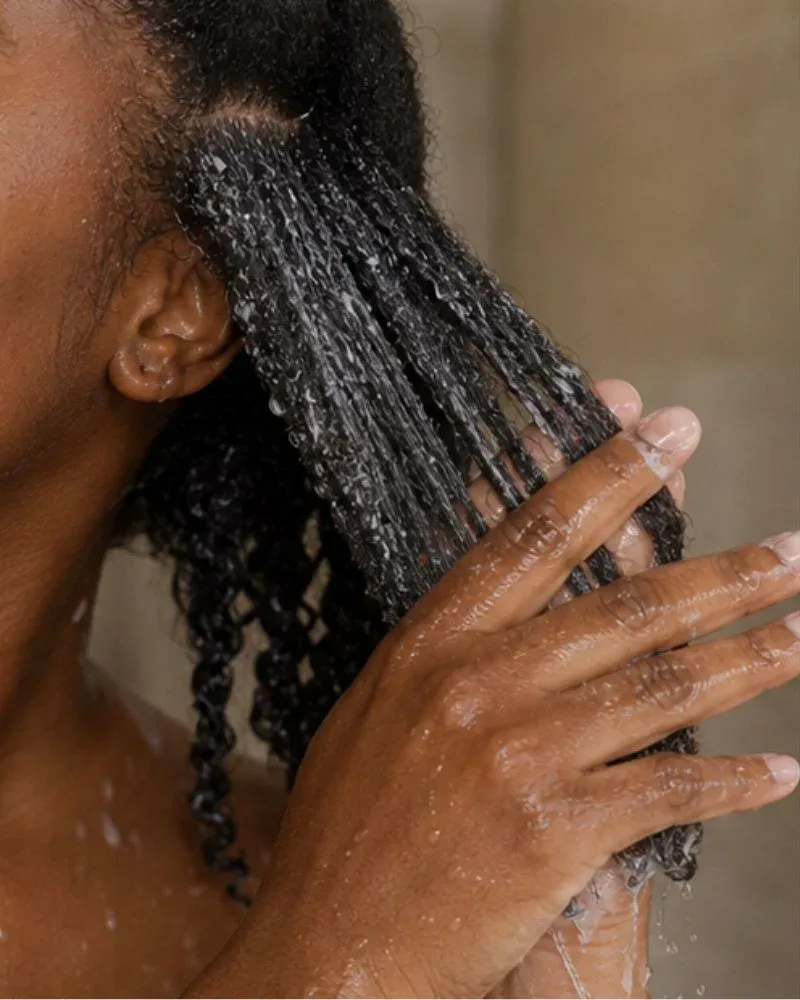
Cleansing is the foundation of a healthy wash day. Shampoo removes sweat, excess oil, dirt and residue left behind by styling products. Fully saturate your hair with water before applying shampoo, then use the pads of your fingers to massage your scalp. Avoid scratching with your nails, as this can irritate the scalp.
Focus on your scalp and roots, then gently work the lather through the lengths. Avoid piling your hair on top of your head or rubbing the strands together, as this creates unnecessary friction and tangling.
Rinse thoroughly, then shampoo a second time. The first cleanse loosens sweat, oil and product buildup; the second cleans more thoroughly. This is useful if you regularly apply creams, gels, oils or butters between wash days.
If your hair tangles easily during shampooing, try washing it in four to six sections. A moisturising shampoo with good slip may also help the strands remain more manageable, although shampoo should still cleanse effectively.
When choosing a shampoo, consider what your hair needs:
- Moisturising shampoo: Suitable for regular cleansing when you want to remove dirt without leaving your hair feeling excessively dry.
- Clarifying shampoo: Useful when your hair feels coated, heavy or difficult to cleanse. Some people clarify monthly, but the right frequency depends on their styling products and how quickly buildup develops.
- Sulfate-free shampoo: “Sulfate-free” doesn’t automatically mean gentle, just as the presence of sulfates doesn’t automatically make a shampoo damaging. The complete formula, how often you use it and how your hair responds matter more.
Breakage checkpoint: Keep the hair moving in one direction and avoid piling or roughly scrubbing the lengths together.
Step 2: Condition and Detangle Once
Conditioner helps soften the hair, improve slip and reduce friction after shampooing. This usually makes conditioning the most practical stage for your main detangling session.
Apply conditioner to freshly washed, wet hair, working in manageable sections. If a section starts to dry while you’re detangling, add a little more water before reaching for more product. Gently separate larger knots with your fingers, then follow with a wide-tooth comb or detangling brush if needed.
Work from the ends towards the roots, holding each section above the area you’re detangling to reduce pulling. Keep the other sections separated so loose strands don’t become tangled again. Leave the conditioner on for the time stated on the label, then rinse thoroughly.
Whether you detangle before or after shampooing depends on the condition of your hair. If it was already stretched or kept in a simple style, one detangling session while conditioning may be enough. If you’ve just removed braids, twists or another long-term protective style, gently separating the hair and removing shed strands before shampooing can help prevent matting. You can then lightly finish detangling while the conditioner is applied. The aim is to avoid completing two intensive detangling sessions when one will do.
Keep your strand characteristics in mind:
- Fine Type 4 hair: Use gentle pressure, make fewer passes with your brush and choose lighter products if rich formulas cause buildup.
- High-density hair: Use enough sections to saturate and detangle every area thoroughly.
- Coarse strands: Make sure the hair is fully wet and use enough conditioner to create good slip.
Breakage checkpoint: If your fingers, comb or brush stop moving easily, don’t force the tool through. Add water or conditioner and loosen the knot gently first.
Step 3: Moisturise and Move Into Your Style
Once you’ve rinsed out the conditioner, gently squeeze away excess water with a microfibre towel or cotton T-shirt. Avoid rubbing the hair, as this creates friction and can encourage frizz, knots and breakage.
Apply a leave-in conditioner or water-based moisturiser while your hair is still damp. You can follow with a cream or a small amount of oil if your hair and intended style benefit from it, but you don’t need to layer several products automatically.
The LOC and LCO methods can help some people organise their products, but neither method is compulsory. Fine or lower-density hair generally needs fewer, lighter layers. Coarse strands may respond better to richer formulas. Pay attention to how your hair feels rather than following a layering method simply because it is popular.
Once your hair is moisturised, move directly into your styling routine. Where possible, choose a low-manipulation style that won’t require frequent detangling before your next wash day.
A few things to consider when styling:
- Twists or braids with extensions: Stretching your hair can make parting and installation easier. Use a heat-free method or blow-dry with heat protectant and controlled tension.
- Wash-and-go: Apply stylers to wet hair and distribute them evenly. Use a styling brush only if it improves your results.
- Blow-dried or stretched styles: Use heat protectant and keep the temperature and tension controlled.
- Protective-style preparation: Remove trapped shed hair and avoid applying excessive oils or butters before installation.
For more guidance, read our articles on drying natural hair properly and choosing a heat protectant for natural hair.
Which Wash Day Steps Are Actually Optional?
Some treatments are commonly included in wash-day routines, but that doesn’t mean they need to be done every week. Calling a step “optional” doesn’t mean it is ineffective. It means the treatment should solve an identifiable problem rather than appear automatically on every wash-day checklist.
Pre-Poo
How often: Optional
Consider it when: Pre-pooing loosens knots, makes detangling easier or stops the lengths of your hair from feeling excessively dry after shampooing.
Skip it when: It adds time without improving your results, or your shampoo already leaves your hair soft and manageable.
Clarifying
How often: Occasional
Consider it when: Your hair feels coated, dull, heavy or difficult to clean with your regular shampoo. These can be signs of product buildup on natural hair, especially after using large amounts of oils, butters, gels or styling products.
Skip it when: Your regular shampoo removes buildup effectively and your hair and scalp already feel clean.
Deep Conditioning
How often: As needed
Consider it when: Your hair feels unusually dry, rough or difficult to manage and needs more conditioning than your regular rinse-out conditioner provides.
Skip it when: Your rinse-out conditioner already leaves your hair soft and manageable. You don’t need to use both during every wash day.
Protein Treatment
How often: Occasional
Consider it when: Your hair is damaged, breaking more than usual or showing reduced strength. Follow the product’s recommended frequency because protein treatments vary in strength.
Skip it when: Your hair feels healthy and shows no clear signs of needing additional reinforcement.
Scalp Treatments
How often: As needed
Consider it when: Your scalp has a specific need that the product is designed to address, such as dryness, buildup or occasional flaking. Follow the instructions because scalp treatments vary in purpose and strength.
Skip it when: Your scalp already feels comfortable and clean, or the treatment causes irritation or additional buildup. Persistent itching, soreness, excessive flaking or hair loss should be assessed by a healthcare professional rather than covered up with more products.
LOC or LCO Layering
How often: Optional
Consider it when: Layering products helps your hair remain moisturised and manageable between wash days.
Skip it when: Several layers leave your hair coated, greasy or weighed down. Fine or low-density hair may respond better to lighter products or fewer layers.
How to Make Wash Day Faster Without Increasing Breakage
Cutting down the time you spend washing your hair doesn’t mean rushing or handling it roughly. Type 4 hair still needs gentle care, particularly when it is wet and being detangled.
A fast wash day is not a race. A manageable routine removes unnecessary work while leaving your scalp clean, your hair properly detangled and your strands ready for styling. Here are a few practical ways to save time while minimising breakage:
- Detangle thoroughly once. If your hair needs a second pass, keep it light and complete it while the conditioner is applied.
- Use four to six sections. Create enough sections to keep your hair manageable without making so many that sectioning becomes another time-consuming task.
- Choose one treatment per wash day. Instead of combining a pre-poo, protein treatment, hot-oil treatment and deep conditioner, select the one your hair genuinely needs.
- Follow the product instructions. Leaving a conditioner or treatment on for several hours doesn’t necessarily make it more effective.
- Choose a simple style that can last throughout the week. Twists, braids or another low-manipulation style can reduce the need for frequent detangling and daily touch-ups.
- Speed up the drying process when necessary. A hooded dryer or carefully controlled blow-dryer can be more practical than waiting several hours for dense Type 4 hair to air-dry. Use a heat protectant where appropriate and keep the temperature controlled.
- Maintain a consistent washing schedule. Allowing shed hair and heavy buildup to accumulate can make cleansing and detangling more difficult later.
- Stop switching products constantly. Once you’re familiar with how your shampoo, conditioner and styling products perform, it becomes easier to use the right amount and move through each step efficiently.

A Realistic 60–90-Minute Wash Day Schedule
Here’s an example of a simple Type 4 wash day that can be completed in approximately 60–90 minutes:
- 5–10 minutes: Fully saturate your hair, divide it into sections if needed and gently remove any obvious knots or shed hair.
- 10–15 minutes: Shampoo twice and rinse thoroughly.
- 15–20 minutes: Apply conditioner and complete your main detangling session.
- 5–10 minutes: Rinse out the conditioner and gently remove excess water.
- 20–35 minutes: Apply your leave-in products and install a simple style.
These timings are only a guide. Longer or denser hair may require more time, and drying time is separate. If you’ve recently removed braids, twists or another long-term protective style, you may also need to spend longer removing trapped shed hair and detangling before shampooing.
Some wash days will take longer than 90 minutes. Even then, a streamlined routine can keep the process closer to two hours than an entire day.
Final Thoughts: Your Hair Does Not Need Every Step Every Time
A successful wash day should leave your scalp clean, your hair manageable and your strands prepared for styling. It doesn’t need to include every treatment in the natural hair handbook.
Focus on three essential stages: cleanse; condition and detangle; then moisturise and style. Add optional treatments when your hair or scalp shows a genuine need. This approach reduces unnecessary manipulation, supports a healthier routine and makes it easier to remain consistent.
The best wash day routine isn’t the one with the most steps. It’s the simplest routine that cleans your hair properly and helps you care for it without causing unnecessary breakage. For help building a routine beyond wash day, read our realistic 4C hair routine for length retention.
Frequently Asked Questions About Wash Day Routine for Type 4 Hair
Washing every 7–10 days is a practical starting point. Adjust the schedule according to exercise, scalp condition, hairstyle and product buildup. If your scalp becomes itchy, uncomfortable or heavily coated before wash day, cleanse sooner. For most routines, we recommend cleansing within two weeks rather than waiting for heavy buildup or discomfort.
No. Deep conditioning can be helpful when your hair feels unusually dry, rough or difficult to manage, but it isn’t essential every wash day. A good rinse-out conditioner may provide enough softness and slip for your regular routine, and it usually works within a few minutes. Use a deep conditioner when your hair needs additional care rather than automatically using both.
Either can work, but avoid completing two intensive detangling sessions unnecessarily. Detangling creates mechanical stress on the strands, so the goal is to remove knots with as little repeated handling as possible.
Because Type 4 strands can wrap around one another, detangling before shampooing may be helpful after removing braids, twists or another long-term style. You can then complete a lighter detangling session while your conditioner is applied. If your hair isn’t heavily tangled, one thorough session during conditioning may be enough. Whichever method you choose, use plenty of water and a product with enough slip.
Yes. Pre-pooing is optional. Keep it in your routine if it makes detangling easier or noticeably improves how your hair feels after shampooing. If it adds time without changing your results, you can confidently skip it.